ServicesCommercial Roofing
Commercial Roofing in Travis Ranch
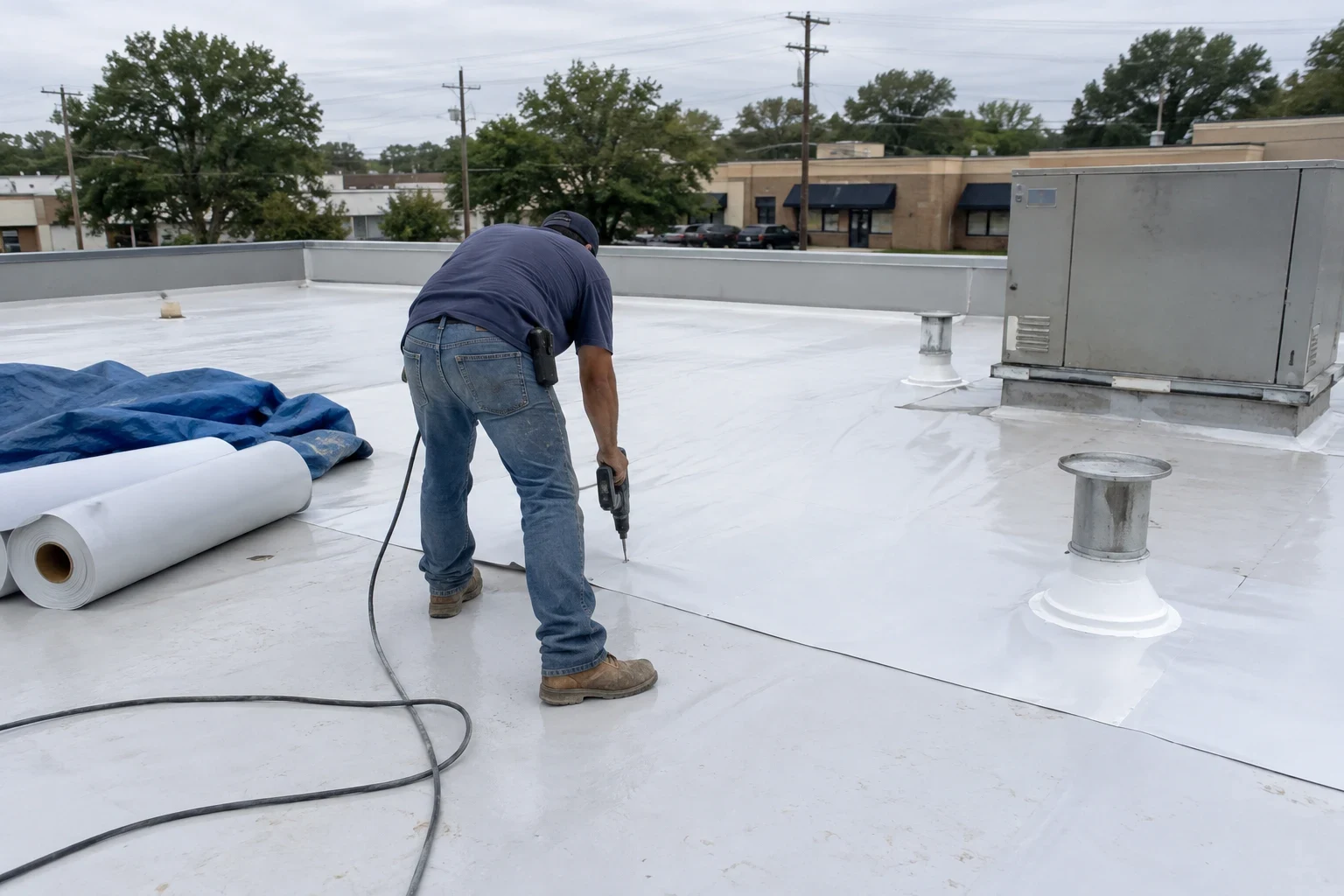
We put new roof systems on offices, storefronts, shops and small warehouses. Each building gets a membrane or metal system matched to its slope and use, tight detailing around every drain and penetration, and a return trip after the work is done to confirm the roof is performing.
A roof system built around how your building works
Commercial roofs ask different things of a crew than a pitched house roof does. Most are low-slope, so water moves slowly toward drains and scuppers, and every seam, curb and pipe boot has to stay tight for years. We plan each job around the deck, the rooftop equipment and the way your business runs day to day.
We are a licensed roofing company with 10 years of experience, and our commercial work follows the same habit as everything else we do. We finish the roof, then we come back. On that visit we walk the surface with you, look at the drains and flashings, and explain what to watch for and what to leave alone.
If your project involves interior build-out or other trades, our Commercial Contracting page covers that side of the work.
What our commercial roofing work includes
Single-ply membranes
TPO and similar white membranes reflect much of the North Texas summer sun, which helps keep the space below cooler. We heat-weld the seams and probe them before we call a section done.
Modified bitumen systems
A multi-ply asphalt system suits buildings that see foot traffic from HVAC service. It handles scuffs and dropped tools better than thinner sheets.
Standing seam and panel metal
For low-slope and pitched commercial roofs, metal gives a long service life and a clean finished look. Fastener layout and panel expansion are planned so the roof can move with the heat.
Flashing, curbs and penetrations
Most leaks on flat roofs start at the details, not the field. We flash HVAC curbs, vent stacks, skylights and parapet walls with matching materials so the whole system ages together.
Drainage layout
We set tapered insulation and drain positions so water leaves the roof instead of sitting in low spots. Standing water shortens the life of almost any membrane.
When a commercial roof is due for a new system
Puddles that linger
If water is still sitting on the roof two or three days after a storm, the insulation may be sagging or the slope may be off. That standing water also loads the deck with weight it was not built to hold.
Rings on ceiling tiles
Brown marks in a drop ceiling tend to show up only once water has spread through the insulation overhead. By the time you see them, the wet area is usually larger than the stain.
Bubbled or cracked membrane
Blisters, splits and edges that shrink back tell you the sheet is losing its grip on the layers below.
Cooling costs creeping up
A faded, worn surface and damp insulation both let summer heat through. When utility bills rise with no obvious cause, the roof deserves a closer look.
How a commercial roofing project runs
- 1
On the roof together
We measure, look at the deck from above and from below where possible, and note drains, equipment and access points. You receive plain notes and photos of everything we saw.
- 2
A written proposal
It covers the system we recommend, any alternatives worth considering and every line of the scope. The permit and the schedule are spelled out too, so the job day matches what you read.
- 3
Installation around your hours
Materials are staged to keep entrances and parking usable, and we discuss noise and odor with you before starting. At the end of each day we clean up and run a magnet over the lot for stray fasteners.
- 4
Handover and care guidance
Once the last section is finished, we tour the roof with you. We show how to keep drains open and point out the areas other rooftop contractors should not walk on.
- 5
A follow-up visit
After a few rounds of weather, we come back to look at seams, flashings and drainage. We treat this visit as part of the job, not an extra.
What moves the price of a commercial roof
Square footage is only the starting point. Two buildings of the same size can be priced very differently once we account for what sits beneath the membrane and what is bolted on top of it. Each factor below gets its own line on the estimate we write up, and we go through those lines with you before anything is scheduled.
- Footprint and layout
- A large, plain rectangle goes down faster per square foot than a roof cut up by parapets, level changes and inside corners.
- System and insulation
- The membrane you choose, its thickness, the metal gauge and how much tapered insulation the drainage plan needs all shift the total.
- What we find underneath
- Soaked insulation or soft decking must be removed before new material goes on. We photograph it so you can see the reason for the line item.
- Rooftop equipment and access
- Each HVAC unit, curb and pipe means more detail work. Tight access, after-hours scheduling and the permit the job calls for are priced in as well.
Common questions on commercial roofs
Something not covered here? (972) 962-9770
Can we keep the doors open while the roof is being done?
Usually, yes. We plan the loudest stretches and the material lifts around your business hours, and customers keep their entrances and parking. If an area needs to close or stay quiet for a time, the proposal says so ahead of time, so the work day holds no surprises.
How do you pick between TPO, modified bitumen and metal?
We weigh the pitch, the amount of foot traffic, the state of the deck and how long you plan to keep the building. TPO tends to fit flat roofs that need to stay cool. Modified bitumen stands up to frequent visits from HVAC techs, and metal works on roofs with enough slope. We explain the tradeoffs simply, and you make the call.
Does a warranty cover your work?
Eligible projects carry our workmanship warranty, with coverage that varies by service. The terms for your roof come to you in writing before the job begins. Material coverage from the manufacturer is a separate matter, and we go over it for whichever system you choose.
What happens once the roof is finished?
We tour the roof together, leave you written care notes and return after it has seen some weather. During that trip we confirm the seams and drains are doing their job and take any questions you have gathered.
Do you handle the permit?
We do. When a permit is required, we obtain it and book the city inspection on our end. Both show up in your estimate and on the schedule, so you can see when each one takes place.
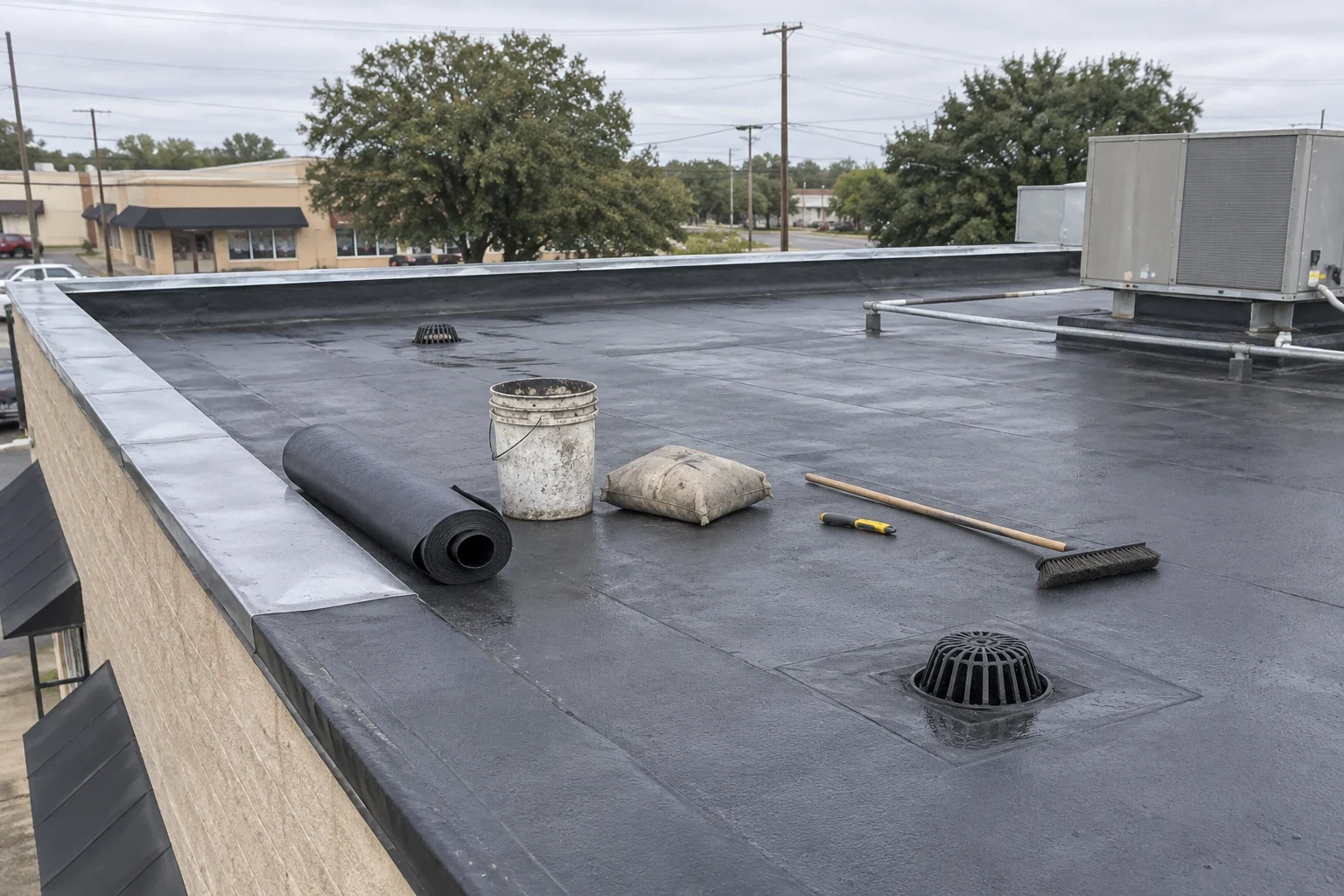
Talk through your building's roof with us
Give us a short picture of the building and anything you have noticed, from ponding to stained ceiling tiles. We will arrange a visit, look over the roof in person and follow up with an itemized written estimate.