ServicesResidential Roofing
Residential Roofing in Travis Ranch
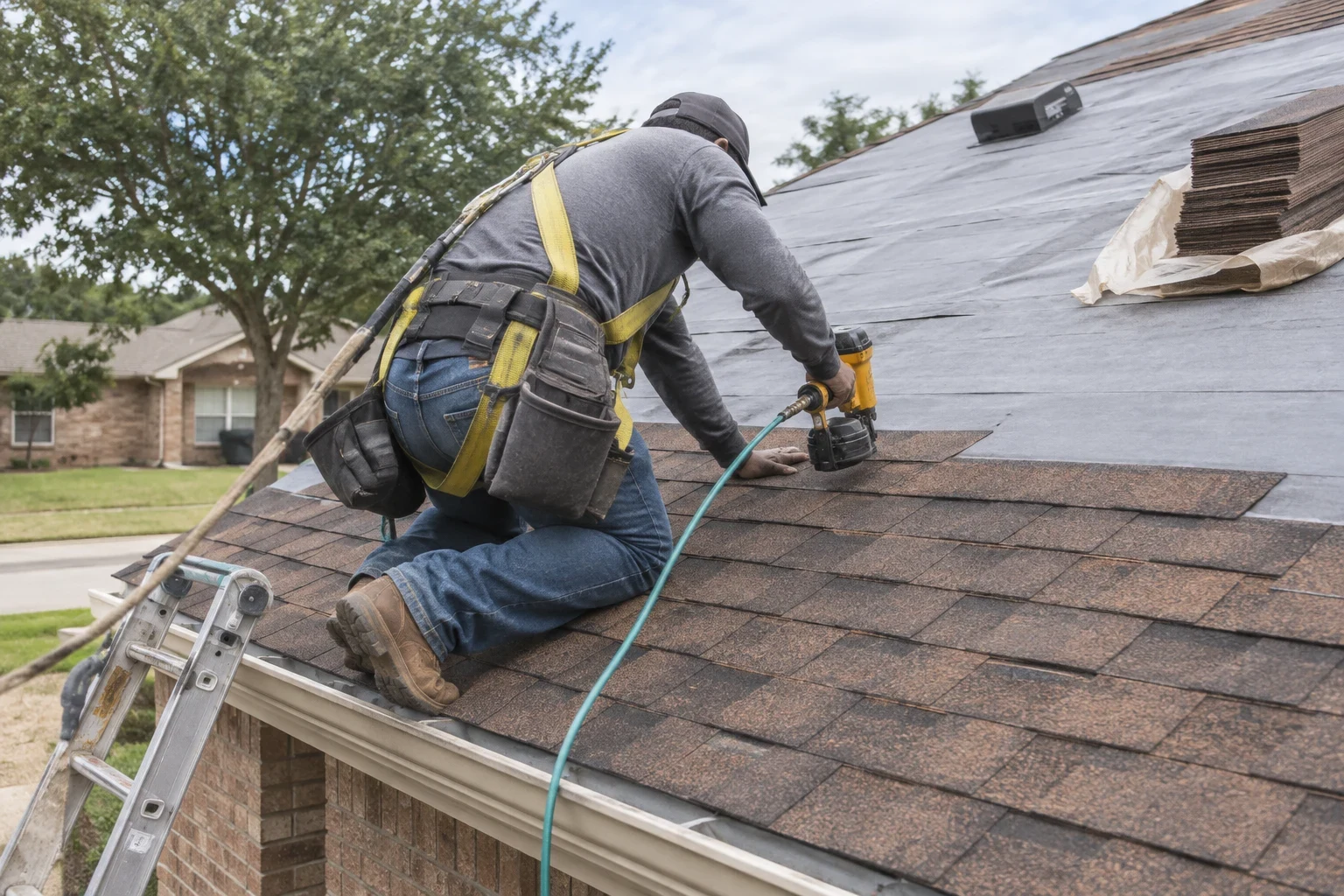
We install new roofs on homes with the same care for the parts you never see as for the shingles you do. When the crew leaves, we are not done. We come back to check the work and show you how to keep it in good shape.
A new roof, built from the deck up
Residential roofing is the full roof system over your home: decking, underlayment, flashing, ventilation and the finished surface. When those layers are chosen to work together and installed in the right order, the roof sheds water, handles summer heat and keeps its look for years.
Many homes in Travis Ranch and nearby towns like Forney and Heath went up with basic builder-grade shingles. Those roofs often show their age sooner than owners expect, and a new roof is the point to upgrade to a heavier architectural shingle and better attic airflow.
We bring 10 years of experience to this work, and we treat the weeks after the job as part of it. A return visit lets us confirm everything has settled the way it should and answer the questions that only come up once you have lived under the new roof for a while.
What comes with your new roof
Stripped down to bare decking
Old shingles and underlayment all come off so the deck is in plain view. Laying new shingles over old ones buries problems and loads the framing with weight it was never meant to carry.
Every deck board inspected
Any sheet that is soft or peeling apart gets shown to you and photographed, then swapped out before new layers go on. You know what we found before we repair it.
Underlayment plus a self-sealing barrier
The entire deck is covered in synthetic underlayment. Valleys and the areas around vents and pipes, where water collects and moves slowest, also get a membrane that closes tight around every nail.
Fresh flashing wherever surfaces meet
We put in new pipe boots, wall flashing and chimney pieces instead of reusing the old ones. These small parts are the most common place a roof starts leaking, so we do not hurry them.
Attic airflow in balance
Soffit vents draw cooler air in near the eaves and a ridge vent lets hot air out at the peak, keeping the attic moving air. Through a Texas summer that airflow helps the shingles last and can take some load off your air conditioner.
Nail sweep and a visit afterward
A magnetic roller goes over the lawn, driveway and flower beds to pick up nails. Down the road we return to look at the finished roof and explain the simple upkeep it needs.
Signs your home is ready for a new roof
Shingles curling or cupping
Edges that lift or corners that turn up mean the shingles have dried out. Wind can then get underneath and lift them further.
Granules at the downspouts
Coarse, sand-like grit washing out after rain is the protective surface leaving the shingle. Once it thins, the sun breaks down the asphalt faster.
Stains on ceilings or attic decking
Dark rings or damp spots on the underside of the deck point to water getting past the roof, often at flashing or in valleys.
An attic that stays very hot
If the attic feels like an oven well into the evening, ventilation may be poor. That heat ages shingles from below.
A roof made of patches
Mismatched shingles across several slopes usually mean the roof has been chasing small problems for years. A full new system is often the calmer choice.
How the work goes, from first call to follow-up
- 1
A free estimate at your home
We look over the roof, the attic where we can reach it, and the details that drive cost. You get a written estimate that lists materials and scope line by line.
- 2
Materials and permit
You choose shingle style and color with samples in hand. Where your city requires a permit, we pull it and schedule any required inspection.
- 3
Installation day
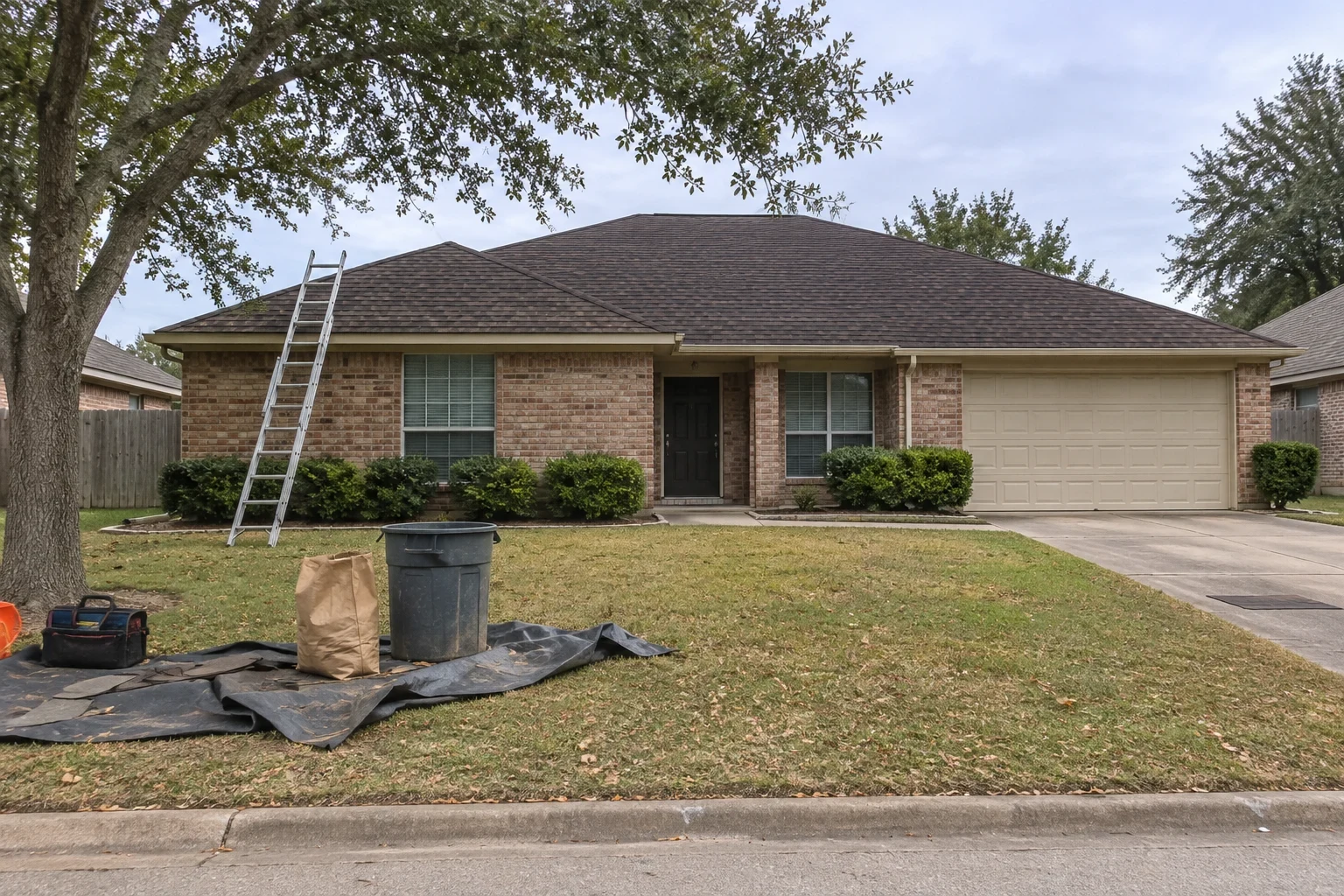
We protect landscaping and walls with tarps, tear off, check the deck and build the new system up layer by layer. A typical home takes one to two working days, with larger roofs or a stretch of rain adding time.
- 4
Final walk-through
We walk the property with you, show photos of what was found under the old roof, and finish the nail sweep before we leave.
- 5
Follow-up and care
After the roof has been through some weather, we check back on the work and explain how to look after it: keeping valleys clear of leaves, trimming branches away and watching the seals around vents.
What drives the price of a new roof
We price each roof from our own measurements and what we see on site, never from a chart. The written estimate splits the job into separate lines, so materials, labor and any permit are simple to follow. If tear-off turns up a surprise, you see it before anything changes.
- Size and pitch of the roof
- More roof means more shingles, more underlayment and more hours of labor. On a steep pitch the crew uses harnesses and roof jacks and moves slower to stay safe.
- Old layers and deck condition
- Removing two old layers takes more time than removing one. Replacing damaged decking adds both material and labor.
- Which shingle you pick
- Architectural and impact-rated shingles are priced above basic ones, and the color or profile you want can affect what is in stock.
- Roof features and venting
- Chimneys, skylights, multiple valleys and extra ridge or intake vents each mean more detail work where surfaces meet.
Common questions about home roofs
Something not covered here? (972) 962-9770
Will my house sit uncovered while you work?
No. We tear off only what we can cover and seal before the day ends. Most homes take one to two days, and larger or steeper roofs can run a little longer.
Do you hold a license, and do you offer a warranty?
Yes, we are a licensed roofing company. Eligible projects include a workmanship warranty, and what it covers varies by service. When we go over your estimate, we explain how it applies to your roof.
What happens on the return visit?
After the roof has seen some heat and rain, we come back to look at the flashing, vents and ridge and answer any questions. We also show you what to watch for, like leaves collecting in the valleys or branches rubbing against the shingles.
Which shingle suits my house best?
On most homes around here we suggest a heavier architectural shingle, since it lasts longer than the three-tab shingles builders often use. If you worry about hail, we can walk you through impact-rated shingles and how they compare.
Do I need to be home during the job?
Just for a short time. It is useful to be there when the crew arrives and again at the end, when we look over the roof together. Before work starts, please move cars away from the house and bring fragile things near the outside walls inside.
Talk with us about your new roof
Give us a few details about your home and the roof over it, and we will find a convenient time to visit, measure and put a written estimate in your hands. You will know the scope, the materials and what care looks like afterward.